Europe, US split deepens before G20 finance talks
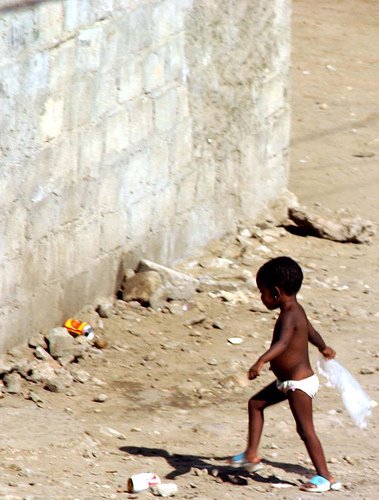
Who will remember the poor countries which the IFIs have pledged to help? They didn't when they could. Now they cannot even save themselves
$$$$$$$$$$$$$$$$$$$$
World finance chiefs prepared for a ministerial meeting of the G20 leading economies near London on Saturday that threatens to expose deep divisions over how to halt the raging economic crisis.
Just three weeks before a gathering of heads of state from the Group of 20, discord seems to outweigh lip service to coordination and a German-French drive to focus on cross-border rules for finance is further souring the air.
"We have agreed that Germany and France will send a common signal at this summit" on April 2, German Chancellor Angela Merkel said at a joint press conference with French President Nicolas Sarkozy in Berlin.
"The issue is not spending even more but to put in place a regulatory system to prevent the economic catastrophe that the world is experiencing from being repeated," Merkel said in a direct rebuttal to US calls for more spending.
There must be "regulation and transparency of financial markets," she said.
US President Barack Obama, who enacted a 787-billion-dollar stimulus bill last month, tried to bridge the gap on Wednesday, calling for a two-pronged G20 effort to fix the global economy: stimulus measures and regulatory reforms.
But after a meeting of eurozone finance ministers this week, their chairman Prime Minister Jean-Claude Juncker of Luxembourg rejected the US calls for more pump-priming by other G20 economies, declaring such proposals "do not suit us."
Juncker after conferring with Czech officials in Prague on Thursday again voiced opposition to any additional spending plan to combat the crisis.
"The European recovery programme represents a spending level of 3.4 to 4.0 percent of GDP," he said.
"Our public finances are beginning to suffer and we must take account of the effects these programmes will have in 2009 and 2010 before we undertake additional spending."
The US stimulus is substantially more than the 400 billion euros engaged by 27 EU countries. The two total economies are of comparable size, but the EU has not forged an integrated response.
US Treasury Secretary Timothy Geithner has also called for the International Monetary Fund's "New Arrangements to Borrow" credit programme to be boosted to 500 billion dollars -- far more than proposed by the Europeans.
For the whole of 2009, Britain is chairing meetings of the G20 -- a grouping of 19 developed and developing countries plus the European Union that includes China, Germany, Japan, Mexico, Turkey and the United States.
The main point of contention appears to be a push by the United States and Britain -- which have angled much of their rescue spending on boosting demand -- for some leading EU countries to do likewise.
The United States and Britain have included heavy demand-side measures, such as a cut in sales tax in Britain, because they stimulate activity quickly.
They argue broadly that some countries, principally Germany but also France, have focused unduly on increasing state spending on investment in industry and infrastructure and should now allocate extra funds to spark consumption.
However, leading countries in Europe face constraints on their big budget deficits, which are rising markedly above EU limits.
German officials have also begun to talk about "exit strategies" from the massive state spending and support programmes once the crisis begins to abate.
European Commission chief Jose Manuel Barroso on Thursday defended Europe's efforts to soften the blow of the global crisis.
"The social system of Europe is very different from the American one," he told a news conference in Brussels.
"We have, compared to the US, a very ambitious system of social safety nets, in terms of unemployment, in terms of public health and in many other areas.
"So when we talk about fiscal stimulus, it's not the same thing in the US and in Europe because the Americans usually think about discretionary additional fiscal stimulus," he said.
Finance ministers and central bankers from G20 economies, will begin arriving on Friday at a hotel in the small town of Horsham south of London where the meeting is to be held.
"Ministers will discuss medium-term regulatory frameworks, the need for improvements to the financial system and wider economic stimulus and speak out against protectionism," Investec Securities economist Philip Shaw said.
Labels: Crisis, Europe, G20, IFI, United States of America
Banks, Firms, Now Countries Falter
We can always be sure that when the US sinks, they drag the whole world down with them.
What would Obama do?
$$$$$$$$$$$$$$$$$$$$$$$$
Source:
The ScotsmanMORE countries may be forced to seek unprecedented help from the International Monetary Fund, experts warned last night, after another day of turmoil on world markets.
Hungary has followed Iceland and Ukraine in securing funding from the IMF to prevent complete financial meltdown. Pakistan and Belarus are in talks with the IMF, while glaring holes in a number of other countries' economies have led to predictions that more begging bowls may soon come out.
Experts told The Scotsman countries such as Ireland, which has guaranteed all its bank deposits, could find themselves in need of international help.
Government bail-outs of financial institutions have become almost commonplace – and now countries themselves are having to be saved.
The latest IMF guarantees came on a day of extreme volatility on world stock markets, with billions wiped off shares in leading firms and the pound sinking to a five-year low against the dollar.
In a bid to soothe the chaos, the G7 nations issued a statement pledging co-operation in the crisis. Britain, Canada, France, Germany, Italy, Japan and the United States reaffirmed their "shared interest in a strong and stable international financial system".
At the same time, they voiced concern about "excessive volatility" in the value of the Japanese yen, which on Friday hit a 13-year high against the dollar.
The yo-yoing world currencies make trading sluggish, as it is impossible to ascertain how much deals are worth.
"There's lots of volatility, not just in the equity market, but in the interest rate and currency markets too," Neil Parker, market strategist at Royal Bank of Scotland, said. "We're going to get further big swings as the markets watch for what the authorities are going to do."
On Friday, the IMF bailed out Iceland – whose swift collapse has devastated UK pension funds and investments – to the tune of £1.34 billion. Yesterday, however, Geir Haarde, its prime minister, said Iceland needed double that again.
He spoke as the fund agreed to lend to Hungary and Ukraine.
It is to offer a £10.4 billion loan to Ukraine and has agreed an as-yet undisclosed package with Hungary. David Hauner, an analyst at Bank of America, said it would probably receive about $12.5 billion (£8 billion).
Eastern Europe has suffered greatly from the global financial crisis as foreign investors who were once bullish about the region's prospects of strong economic growth and deeper integration into the European Union have dumped their assets.
In particular, there is concern that countries such as Ukraine and EU members Hungary, Romania, Bulgaria and the Baltic states may not be able to handle their large foreign debt burdens. Standard & Poor's rating agency yesterday reduced Romania's sovereign rating to junk status.
Neil Shearing, an economist at Capital Economics, said "the most vulnerable countries in the region have yet to be hit by the crisis". He added: "Accordingly, it seems that the IMF's work has only just begun."
Professor Gabriel Talmain, director of the Centre for Economic and Financial Studies at Glasgow University, said: "Countries have taken a very big gamble when they started to guarantee the banks. If the Irish government was to be called on to honour all the guarantees that it has put up for its banks, God knows what will happen. They would be the next (to seek an IMF loan]."
The Washington-based institution has said it can provide up to £128 billion in loans to countries facing financial difficulties.
Prof Talmain said European countries were not in the habit of going to the IMF for cash and warned the fund's members would probably have to cover for loans that could not be paid back.
Meanwhile, investors endured a rollercoaster ride yesterday, as London's leading share index pulled back from five-year lows. The FTSE 100 Index plunged to its lowest point since March 2003 at one point, falling 5 per cent as a sell-off in Asian markets spooked jittery traders. Japan's Nikkei index fell 6.4 per cent to reach its lowest close since 1982, while Hong Kong's Hang Seng closed 13 per cent down.
But a better-than-expected start on Wall Street and a broad hint from the head of the European Central Bank of more interest rate cuts next week helped the top-flight claw back most of the losses.
Among the shares hit in London were those of the leading banks, which have been swinging wildly for weeks. RBS, which is preparing for a big government cash injection, fell 5.92 per cent to only 57.2p a share. And HSBC, which had been flying high above other institutions, tumbled 4.74 per cent to £6.63.
Meanwhile, HBOS and Lloyds TSB were both up marginally, while Barclays dropped slightly.
Brown's famous 'golden rule' becomes early victim of Britain's slide into recessionALISTAIR Darling, the Chancellor, is expected to consign the government's main economic rules to history tomorrow, as a result of having to borrow vast sums to keep the country afloat during the recession.
He is expected to use a set-piece speech to indicate that the "golden rule" – imposed by Gordon Brown in 1997 to win New Labour credibility in the City – has been abandoned.
The rule prevents the Treasury from using public borrowing to fund current spending, such as wages or tax cuts, over the economic cycle. It permits borrowing only for investment in major capital projects, such as schools and hospitals.
But with UK borrowing already at £37.6 billion for the first half of this financial year, experts believe the final sum will be £64 billion – compared with Mr Darling's target of £43 billion.
Mr Brown yesterday said he was prepared to allow borrowing to rise as it was the "responsible" thing to do.
The second rule he introduced as Chancellor, the sustainable investment rule, has also been broken. This requires national debt to be kept below 40 per cent of the value of the economy over the economic cycle, but the Office for National Statistics said last week it was already at 43.4 per cent.
Mr Brown, in a speech in London, departed from a prepared script that said a "temporary increase in borrowing is the right thing to do to support the economy at this time". Instead, it was only when he was answering questions from the audience, that he mentioned "borrowing" – saying that amounts would come down when the economy picked up and tax revenues increased.
Meanwhile, incapacity benefit was scrapped for new claimants under a drive to get a million more people into work by 2015. People now face a 13-week check – including a 75-minute interview – to assess what tasks they can carry out. Only those with the severest conditions will receive benefits.
Q&A
What is the International Monetary Fund?It is an organisation of 185 member countries that was established to promote monetary co-operation, foster economic growth and high levels of employment, and provide temporary financial assistance to countries.
Does it have infinite funds?It doesn't really have much of its own resources – it has to borrow.
How does it lend money?It has to get the approval of its board, which is made up of representatives from its 185 member states.
Where does it get the cash from?It goes to the wholesale money markets, like any individual government or institution.
Are there any risks to its member states?With these large sums it is now lending – potentially. Professor Gabriel Talmain, director of the centre for economic and financial studies at Glasgow University, said: "If it starts to borrow really large amounts of money, there would be the question of how much the other member countries behind the IMF will pay as a last resort."
He said the current loans were "staggering" and there was only a finite amount of funds available.
What is the advantage of going to the IMF for funds?It's a collective institution, so one government is not relying directly on another. Such a situation would be undesirable for two reasons – it could allow for political pressure to be exerted and it would not provide as much funding.
Why are countries going to the IMF now?Eastern Europe has run into trouble because investors believe it may not be able to cope with the foreign debt it has amassed.
What about Pakistan?The rupee has fallen drastically against the dollar. The country is struggling to combat inflation, which is heading towards 30 per cent, and a collapsing currency. Its central bank, meanwhile, holds barely enough foreign currency to cover five weeks of imports.
Are the loans free from conditions?Certainly not. The conditions can be quite stringent and, for the Eastern European states, they may signal the start of a new era of austerity. But it is Pakistan for which they are a real sticking point, with local analysts accusing the United States of using the IMF as a tool in its war against terror.
Labels: Crisis, G7, IMF, Loan