WTO drops plans for end-2008 Doha meeting
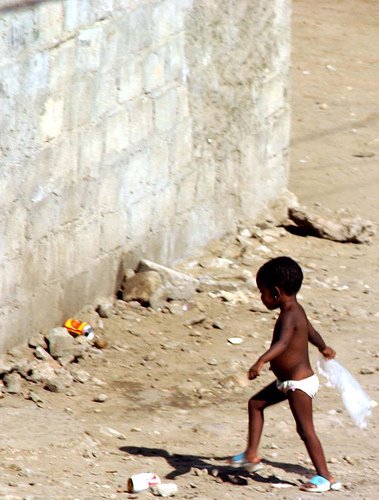
With the G20 nations caught up in the ailing economy, who will remember the third world countries, countries that the IFIs had pledged to assist?
$$$$$$$$$$$$$$$$$$$$$$$$$$$$$$$
Source:
ReutersBy Jonathan Lynn
World Trade Organisation (WTO) Director-General Pascal Lamy has dropped plans for a meeting of ministers to seek a breakthrough this month in its Doha round.
It is the second setback in six months for the seven-year-old round, after the collapse of a meeting in July.
Below are some possible consequences of the decision:
WORLD TRADE AND THE GLOBAL ECONOMY* Many WTO members have the possibility of unilaterally raising tariffs and subsidies from current lower levels to what was negotiated in the last trade round, signed in 1994, or when they joined the WTO.
* Some have already started to do that and, as jobs come under pressure, more will follow. So even if an all-out trade war is unlikely, a protectionist rise in tariffs is on the cards. Doing nothing now could see the clock turn back 10 or 15 years.
* Global trade flows are already slowing and on some counts shrinking, along with the world economy. They are likely to contract next year, squeezed further by the tariff moves.
* Some countries will seek more bilateral or regional free-trade deals to replace Doha -- but those often divert trade rather than creating new flows.
* Trade contraction is bad news for all economies. For the United States exports have been one of the few bright spots. China and other Asian countries seeking to modernise through export-led growth risk social and political turmoil if their economies slow.
* One response to slowing exports could be competitive devaluations, especially by developing countries.
THE DOHA ROUND* A meeting of ministers on Doha has now been put back well into 2009. An idea of next steps should come from the WTO's General Council on Dec. 18-19.
* One option would be for countries to impose a moratorium on tariff and subsidy increases for the duration of the recession as they continue to work on the Doha round.
* But reaching a deal next year will be much harder than now -- the momentum and goodwill that built up around the July meeting will be dissipated, and the state of the world economy will be much less favourable.
* In contrast to July, when there was no blame game, recriminations are likely this time. Since the main stumbling blocks touched on key U.S. interests, the United States can expect to be in the firing line when the finger-pointing begins. That will sour the atmosphere for future talks.
* The new U.S. administration of President-elect Barack Obama taking office on Jan. 20 may take time to get to Doha as it deals with other priorities. And then it may want to revisit what has already been tentatively negotiated.
* A new EU Commission in 2009 and national elections in India in the first half of next year will affect decision-making in two of the biggest trade players.
* More voices will be raised saying the world has changed since the Doha round was launched in the Qatari capital in 2001. They will argue the round should be dropped and new negotiations should start reflecting new priorities such as the economic crisis, food security and the climate change.
THE WTO* Expect a big increase in trade disputes at the WTO as members turn to litigation from the negotiating table.
* Many of these will turn on "dumping" -- where imports are sold for less than they cost at home. China could be a particular target for the United States and EU members.
* The WTO is also going to have to spend more time ruling on the legality of subsidies, as countries bail out industrial sectors hurt by the crisis
* But the credibility of the body that umpires world trade will suffer. The vast majority of its 153 members wanted a deal, and leaders of the G20 rich and emerging nations had called for an outline agreement by the end of this year
GLOBAL GOVERNANCE* As a result the G20 has failed the first big test of its ambition to create a new global governance system replacing the G7 rich countries. The WTO decision comes less than a month after the G20 called for a trade deal this year.
* If the United States takes much of the blame for the failure, it will increase pressure on Obama to prove his multilateral credentials.
Labels: DOHA, WTO
Efforts Begin to Salvage WTO Deal
For all the debts that will never be paid due to the rocket-high requirements of the IFIs... The end of the WTO could actually mark the start of something new or pave way for more imposing tyrants.
$$$$$$$$$$$$$$$$$$$$$$$$$$$$$$$$$
GENEVA: As efforts begin to salvage a deal from the wreckage of last month's global trade talks, experts say the first task is to untangle the confusion around a farm safeguard that became a stumbling block.
The World Trade Organization's director general, Pascal Lamy, said the talks, now in their seventh year, were near agreement on 90 percent of the agenda, especially in the core areas of agriculture and industrial goods. For many WTO members, it would be frustrating to discard that progress because of a dispute about a technical but important measure to help poor farmers withstand a flood of imports.
"Almost everything was right for a conclusion when we had this impasse between the United States and India," the president of Brazil, Luiz Inácio Lula da Silva, said Thursday in Beijing. "If we don't get back to the talks, and if we don't clinch a deal in the coming months, it will take four or five years more, and that would be a huge loss for everyone."
A senior U.S. trade official, Warren Maruyama, said Wednesday that the differences between the United States and big emerging countries like India and China were too complex to be resolved quickly. He said there was no point bringing ministers back together until such issues like the safeguard had been sorted out. But trade diplomats point to several factors suggesting that the negotiations, part of the so-called Doha round of talks, could be resumed soon even if a final deal must wait until after the U.S. elections:
The U.S. trade representative, Susan Schwab, emphasized after the talks collapsed that U.S. offers remained on the table.
WTO members largely refrained from apportioning blame, keeping the diplomatic atmosphere clear for the next move.
India, which fought for more safeguards to protect its farmers, needs a Doha deal for them to be introduced.
Trade officials have said they expect some trade diplomacy on the sidelines of the Olympics, where the president of Brazil will be joined by President George W. Bush and other leaders.
In addition, Lamy, the WTO director general, can review U.S. and Indian positions when he visits Delhi next week and Washington the week after.
The fight over the proposed "special safeguard mechanism," which derailed last month's talks, was not only unexpected but also missed the point, according to some trade experts.
Big developing countries like India and Indonesia wanted a measure to let them raise tariffs to protect their millions of subsistence farmers from a flood of subsidized imports. Exporters - including not only the United States but also developing countries like Uruguay or Costa Rica - said the measure must not conflict with the broader aim of opening markets.
Safeguards are an established part of the trade arsenal, going back to the foundation of the WTO's predecessor, the General Agreement on Tariffs and Trade, in 1947. They allow a country to raise tariffs temporarily to counter a surge in imports that threatens to damage domestic industry.
In recent years, India has been the most prolific user of existing safeguards, applying them 15 times from March 1995 to June 2008, out of a total 164 cases by 39 members, according to WTO figures.
All WTO members have the right to raise their tariffs to the maximum rates, which are negotiated at the WTO, whenever they want, as Brazil did last year with textiles to counter an influx of imports. What a safeguard does is allow a country to raise its tariffs temporarily above the ceiling.
The discussion was complicated last month when developing countries like India and Indonesia said they could apply the new safeguard even to products on which they did not have to cut maximum tariff rates in the Doha round.
The Indonesian trade minister, Marie Pangestu, said the safeguard would only be invoked in emergencies, not as a regular measure. But the implication is that for such products, the safeguard could raise tariffs above the current levels, which were agreed 15 years ago. That would leave exporters, rich and poor, worse off than today.
The talks then deadlocked on whether, and under what circumstances importers, could exceed those ceilings.
Still, the outlines of a possible compromise on safeguards are discernible, trade experts have said. The question is not whether countries can exceed the previous ceilings but whether they are prepared to make new commitments.
If a safeguard created in the Doha round is limited to tariff cuts agreed to in the round, it would be difficult for exporters to reject because WTO members already accept that a sudden influx of imports can hurt farmers. But if developing-country importers do not want to limit the new safeguard to new tariff cuts in the Doha round, they will have to convince exporters why and agree on clearly defined conditions for its use.
Labels: DOHA, IFI, Pascal Lamy, WTO
APEC: Save DOHA
As the Doha round of global trade talks flounder, Asia-Pacific commerce ministers said they will do their best to make them succeed -- while at the same time exploring plans for their own free-trade area.
The 21-member Asia-Pacific Economic Cooperation group, which accounts for half the world's trade, urged its 21 members to exert ``political will'' to push the troubled Doha negotiations in Geneva. The group also said ``the time is right'' to pursue regional economic integration and a possible free-trade zone in the Asia- Pacific.
``We discussed various ways to achieve free trade in the region, including the possibility of a free-trade area of the Asia- Pacific as a long-term prospect,'' APEC's trade ministers said in a communique at the close of a two-day meeting in Cairns, Australia.
The Doha round of global trade talks, which are expected to add hundreds of billions of dollars in commerce and lift millions of people out of poverty, came close to collapse two weeks ago in Potsdam, Germany, over disagreements among the U.S., European Union, Brazil and India.
If not successful this year, the World Trade Organization negotiations on freer global trade ``will go into hibernation,'' U.S. Trade Representative Susan Schwab said yesterday in Cairns.
Talks have stalled over the failure of the U.S., the European Union, India, Brazil and China to open up agricultural and industrial markets and end subsidies.
`Urgent Need'
``There has never been a more urgent need to make progress,'' APEC said in a special statement on the Doha talks. ``We need to make cuts in agricultural and industrial tariffs.''
``We will demonstrate the necessary political will and flexibility, and call upon other World Trade Organization members to do the same,'' the statement read.
Australian Trade Minister Warren Truss released the statement in Cairns yesterday and said: ``It's stronger than any language we've previously used.''
According to Indonesian Trade Minister Mari Pangestu, APEC members in Cairns agreed to exert ``political will'' by individually lobbying Geneva negotiators with their offers for expanding trade and cutting tariffs. ``This is the only real window of opportunity,'' she said.
As many as 30 trade officials are scheduled to meet in Geneva later this month to thrash out differences over agriculture and manufacturing in a bid to arrive at a final series of ``text'' agreements.
Regional Trade Zone
On the group's exploration of an Asia-Pacific free-trade zone, which was discussed at the summit of APEC leaders in Hanoi last year, the group said ``scope exists for more intensive activity across APEC's agenda in support of regional economic integration.''
In Cairns, Schwab said APEC is focused on the Doha round, and the prospect of an Asia-Pacific free-trade zone was remote. ``We're a long, long way from an Asia-Pacific free-trade area,'' she said. ``But you have to do some of the analytic work now. We're talking many years out.''
Lim Jock Seng, Brunei's deputy minister for foreign affairs and trade, said the group was just studying the concept of a free- trade area. ``This is basically preparation,'' he said.
``Our priority remains with the Doha round,'' Truss said today.
``This will be about the fourth or fifth time APEC trade ministers or leaders have called for change in Geneva and it never follows,'' Alan Oxley, Chairman of the APEC Study Center at Australia's Monash University in Melbourne, said in an interview yesterday. ``The key problem is the European community. Until they act significantly to cut their trade barriers in agriculture, things won't move.''
2007 Deadline
APEC was crucial to saving the previous set of trade talks, called the Uruguay Round, in the 1990s, which also floundered on agriculture subsidy issues.
The ambitious and troubled Doha agenda, launched six years ago, has stalled over a failure to reach deals on rice, poultry, bananas and manufactured goods, among others.
The 150-nation World Trade Organization has set a 2007 deadline for the Doha round. Ideally, the framework of a deal should be complete by early August.
The World Bank said in 2005 a successful implementation of Doha could reduce the number of people living in poverty by 32 million within 10 years.
APEC also said it would implement measures to reduce trading costs among its members by 5 percent by 2010, primarily through more transparent import-export procedures.
Trade Costs
Australia's Truss said the standardization of customs procedures across APEC economies, and the better use of the group's business travel cards, among others, could save member economies US$170 billion.
``Implementation of the plan will keep APEC at the forefront of international work to reduce trade transaction costs,'' Truss said.
APEC includes Australia, Brunei, Canada, Chile, China, Hong Kong, Indonesia, Japan, South Korea, Malaysia, Mexico, New Zealand, Papua New Guinea, Peru, the Philippines, Russia, Singapore, Taiwan, Thailand, the U.S. and Vietnam.
Technorati Tags: APEC and DOHA.
Labels: APEC, DOHA